Exploring proportion · 2 min read
Read jewellery scale alongside your outfit’s silhouette
A piece can look large or small on its own. Add the shoulders, collar and sleeves of an outfit, and a different relationship emerges.
Give the piece a setting
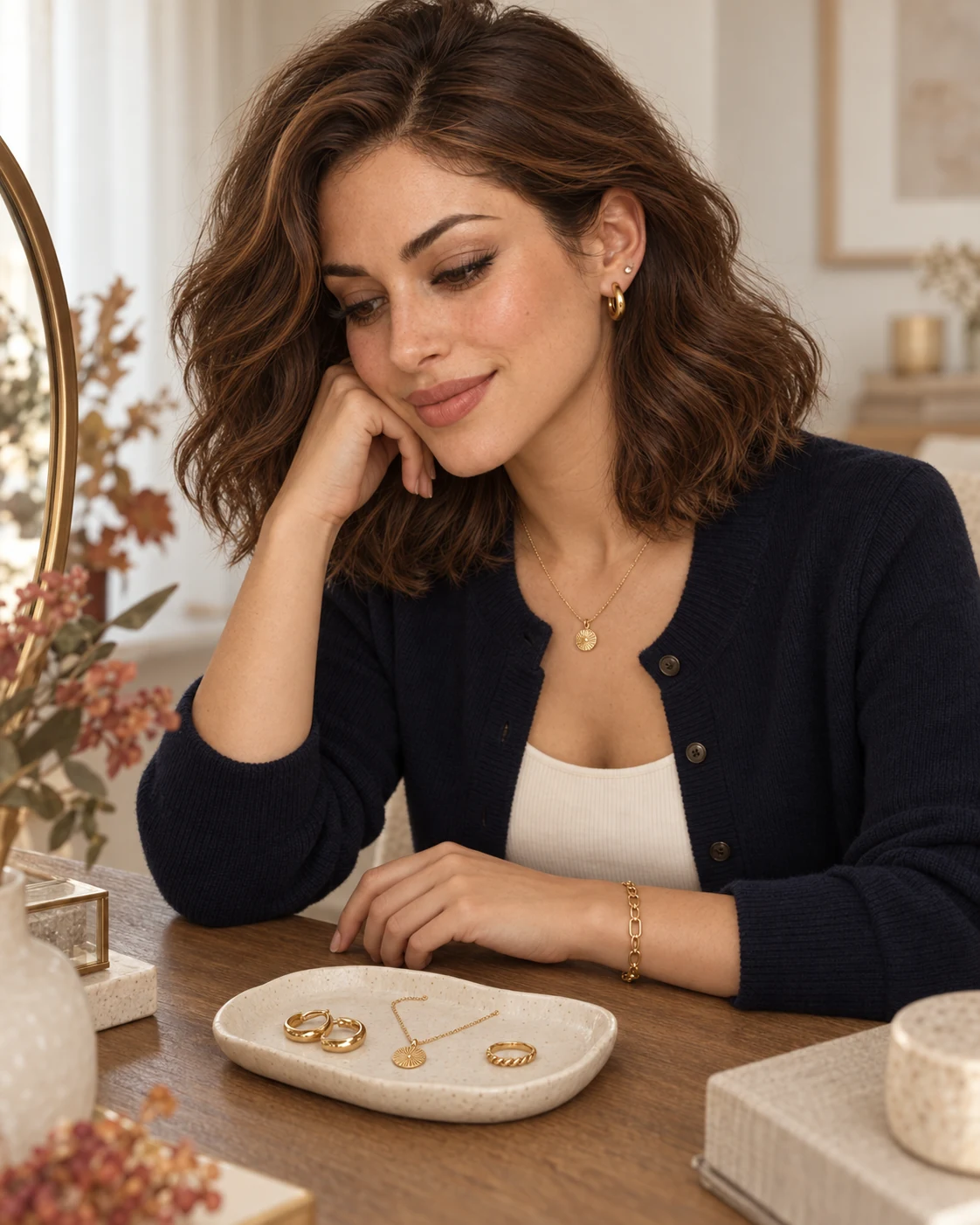
A curved earring can seem quite prominent when it lies on a tray. Imagine it beside a wide-collared jacket, and it may become a small detail within the whole outfit. The jewellery has not changed size; the volume of the shapes around it has changed. Before deciding that larger jewellery is not for you, consider the clothes beside which it felt that way.
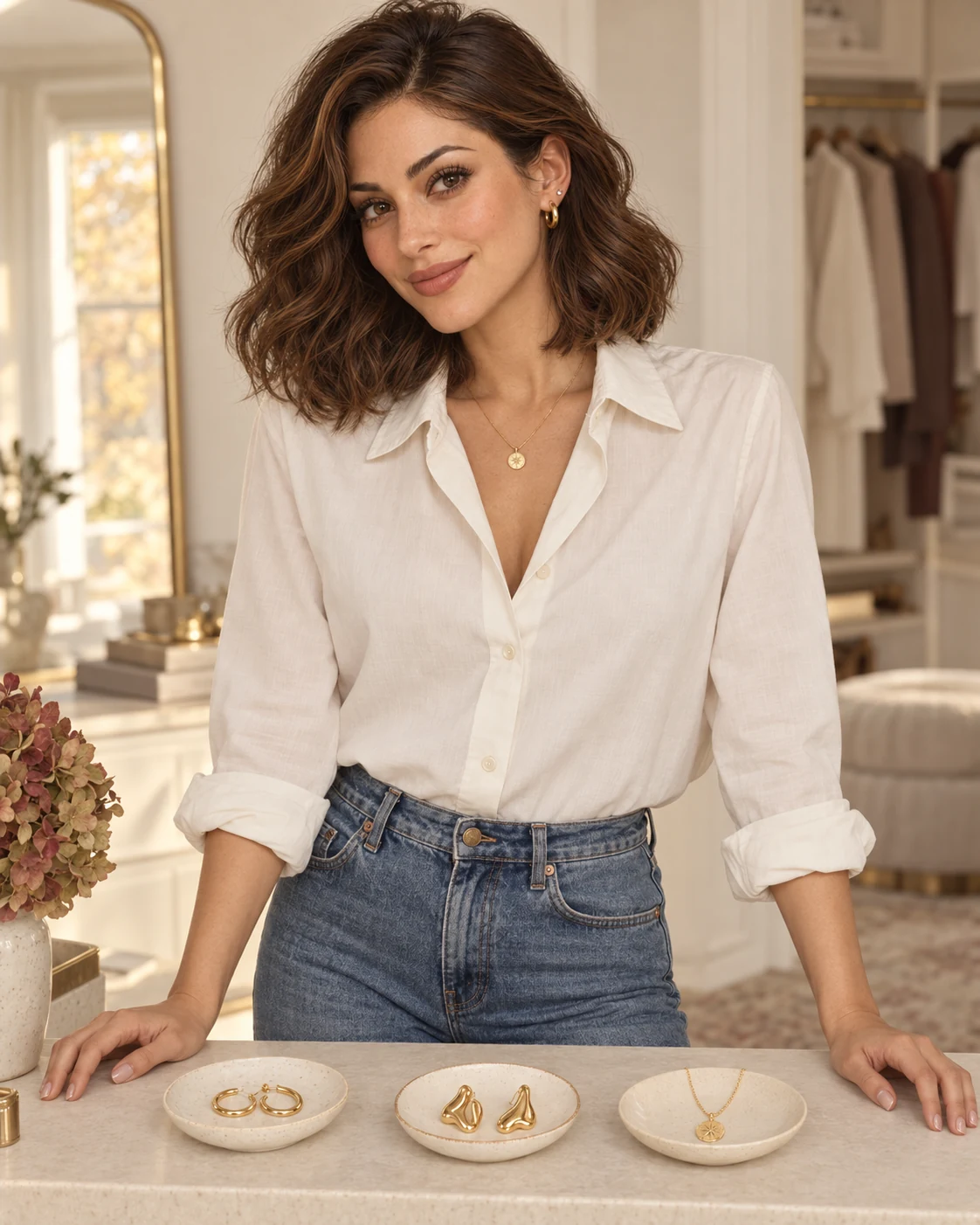
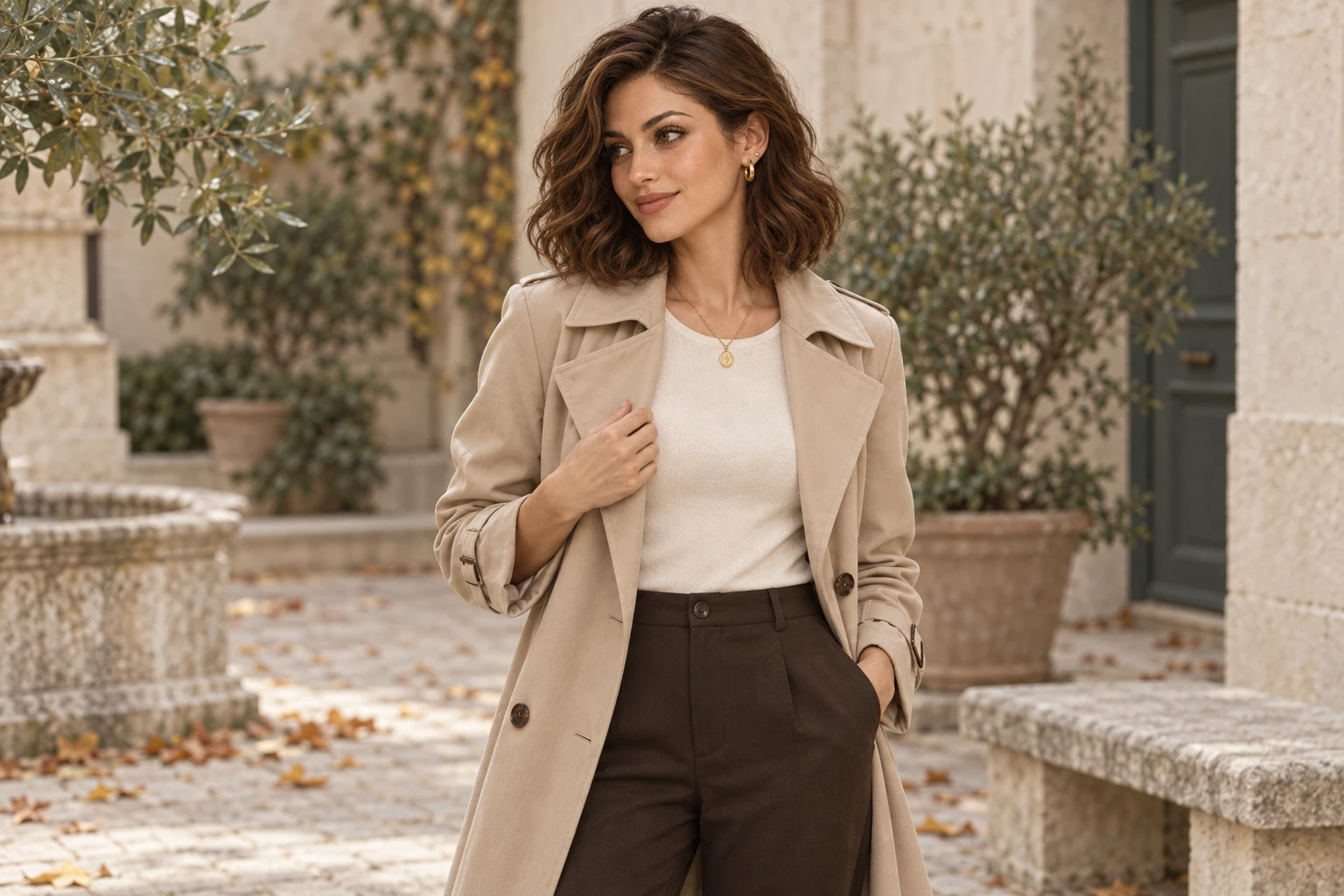
A slim shirt collar and the outline of a trench coat with broader-looking shoulders offer different settings. The length of an earring, the line of a necklace or the visible surface of a ring can read differently within each one. Treat this as a relationship between pieces you wear, rather than a rule that sorts bodies into categories.
Include the thickness of a line
Two hoops may have similar outer outlines while one reads as a fine line and the other as a fuller shape. Look beyond length or diameter: the open space inside a piece and its filled areas belong to its appearance too. Neither version is automatically the better choice.
Place two pieces you already own beside your clothes. Consider the openness a fine line brings to a broad cuff, then the density a fuller shape creates beside that same cuff. Give the relationship a simple name: airy, compact, elongated or rounded. These words describe your preference without needing numbers or technical measurements.
Make a small proportion sketch
Sketch the simple outline of a favourite outer layer today: shoulders, collar and sleeves are enough. Add an uncomplicated outline of the jewellery beside it. The drawing does not need to be beautiful. Its purpose is to help you notice how a fine line or a filled shape accompanies the volume of the clothes.
Write one sentence underneath, such as “I enjoy a small curve beside a wide collar” or “A fuller ring feels good beside a straight sleeve.” Return to that note when you choose again. You do not always need to make the jewellery bigger or smaller; a piece you own may already create the proportion you enjoy.